Modeling & Planning
Powerful expert products and lightweight, use-case-sharp SaaS products empower you to create digital twins and multimodal traffic simulation - microscopic, mesoscopic or hybrid. For accurate & reliable analysis and data visualization to make successful infrastructure decisions and mobility plans.

Master the Entire Mobility Network: PTV Visum
PTV Visum, the world’s leading transportation planning software, empowers mobility experts to design and optimize entire transportation systems. PTV Visum 2026 introduces powerful capabilities for collaborative modeling, advanced intermodal analysis, and data-driven decision-making. With integrated public transport simulations, enhanced GIS tools, and real-time insights, you have the superpowers to plan smarter, faster, and more sustainably.
Release date: October 23, 2025.
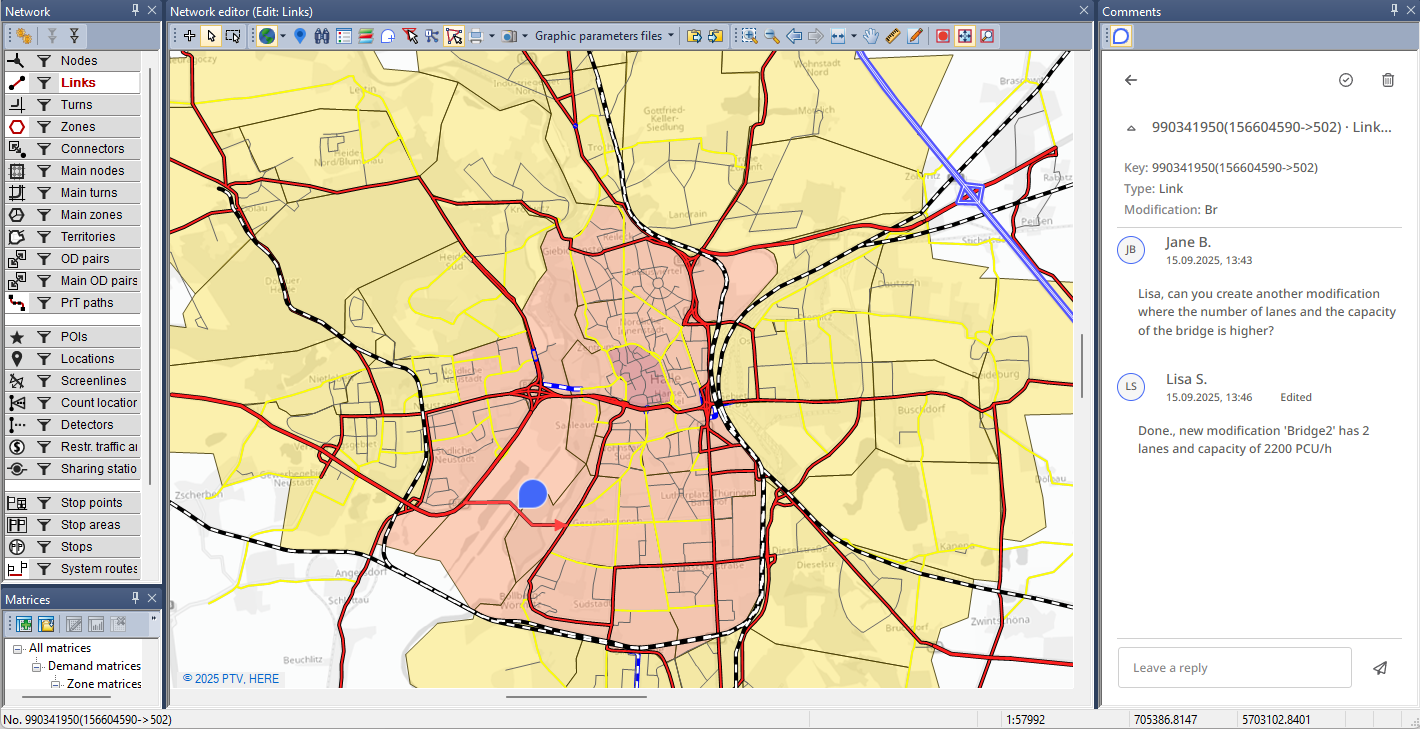
Collaborative Modelling with Comments & Threads through PTV Hub
Collaborate seamlessly via PTV Hub comments: Transport planning is a team effort. With integrated cloud-based commenting through PTV Hub, you can now discuss models directly in the network editor of Visum, Vissim, and Dashboards. Eliminate scattered spreadsheets and emails - review tasks and issues collaboratively, clearly, and in context. Ideal for streamlining communication among modelers, reviewers, and stakeholders.
Mesoscopic Simulation of Public Transport Vehicles
PTV Visum now supports mesoscopic simulation of public transport vehicles in mixed traffic. This enables integrated analysis of road and public transport, helping planners identify delays, assess the effects of roadworks or traffic measures, and optimize timetables. The new feature allows you to evaluate and visualize timetable derivations directly from the simulation results - bridging operations and planning.
This functionality will be released in a ServicePack early 2026.
ABM Population Synthesizer & Incremental Time of Day Choice
PTV Visum now includes a population synthesizer for activity-based models (ABM). Generate synthetic agents with realistic attributes (e.g. age, income, home location) that reflect regional distributions. This enables more granular modeling of travel behavior, zoning, and demographic change - expanding Visum’s use in strategic and land-use planning.
Next Generation of Intermodal Assignment
The former Multimodal Assignment is now rebranded as Intermodal Assignment, featuring a modern UI and advanced capabilities. Feeder distances can be defined per zone in absolute or relative terms. Enhanced parameters model transfer, access, and egress impedance. Subordinate mode demand adjusts dynamically based on preceding path legs, improving behavioral accuracy.
Evaluation of Public Transport Timetable Deviations
Delays are part of daily operations. To tackle this challenge, PTV Visum 2026 lets you store measured departures, arrivals, and delays - helping identify hotspots and assess service reliability. Visualizations highlight problem areas, while converting these records into vehicle journeys enables impact analysis. Planned updates will allow delay simulation under infrastructure disruptions like roadworks.
On-Demand Services in Public Transport Assignment
On-demand mobility enhances public transport in low-service areas, at night, and for piloting new concepts. PTV Visum now introduces an alternative approach to integrate on-demand services into the public transport assignment procedure. It avoids the long runtimes and modeling complexity of microscopic vehicle dispatch simulations while still capturing the essential system-level impacts of on-demand options. This enables faster, more efficient large-scale planning.
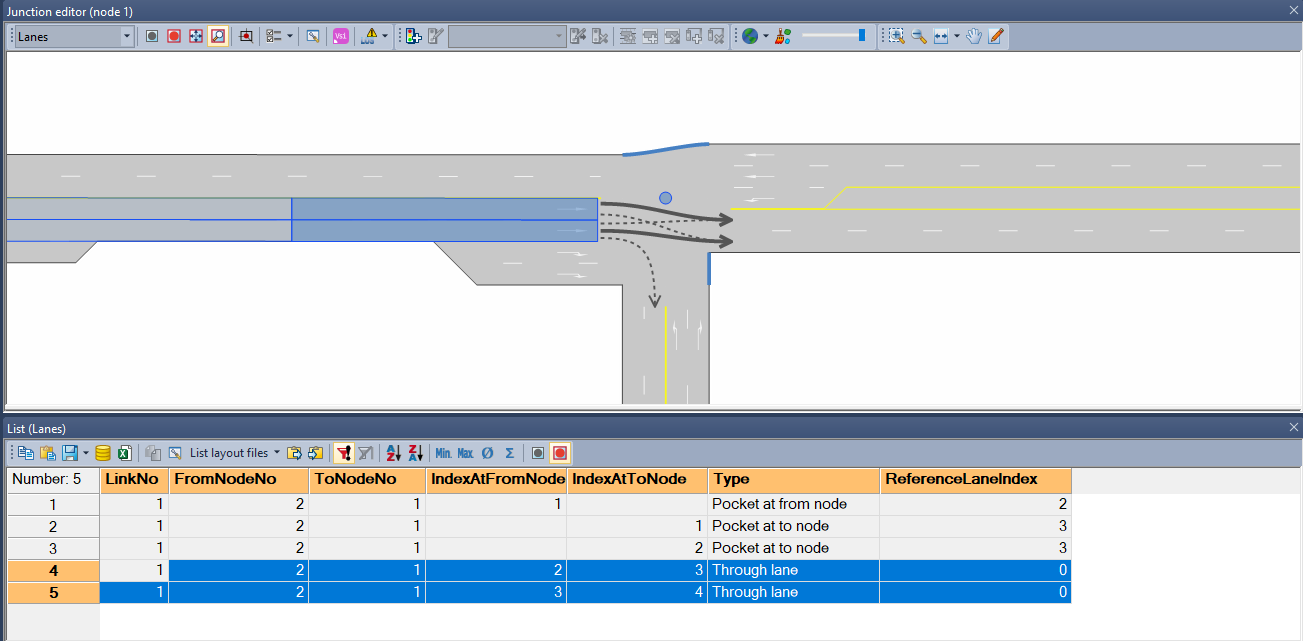
Junction Geometry Data Model and Editing
PTV Visum 2026 introduces a redesigned data model for junction-level detail. Lane and turn data are now preserved during edits like link splits. Lanes are linked to links rather than legs, and leg orientation is no longer an identifier. This avoids data loss, simplifies editing, and improves compatibility with external data sources, especially for traffic and construction planning.
Updated Emissions Calculations: COPERT 5.8 and HBEFA 5.1
PTV Visum’s emissions models have been updated to COPERT 5.8 and HBEFA 5.1, aligning with the latest standards. Enhancements include support for EURO 7 vehicles and more granular non-exhaust emissions. This ensures accurate, future-proof environmental assessments for decarbonization and air quality studies.
The update to HBEFA 5.1. will be released end of 2025.
Import of Turn Volumes and Detector Data from Centracs Mobility
PTV Visum now supports direct import of turn movement and detector data from Centracs Mobility, a leading cloud-based ATMS. This enables improved calibration, supports matrix adjustments, and helps derive dynamic demand - making your model more data-driven and closely aligned with real-world traffic patterns.
PTV Hub - Movement Data Visualization in Dashboards
New visualization options for turning movements: Volumes and other data for turns and main turns can now be exported to PTV Hub Dashboards for visualization in a new Movement Data widget. This enables clear, interactive analysis of traffic flows at intersections - ideal for analysis, communication, and decision-making.
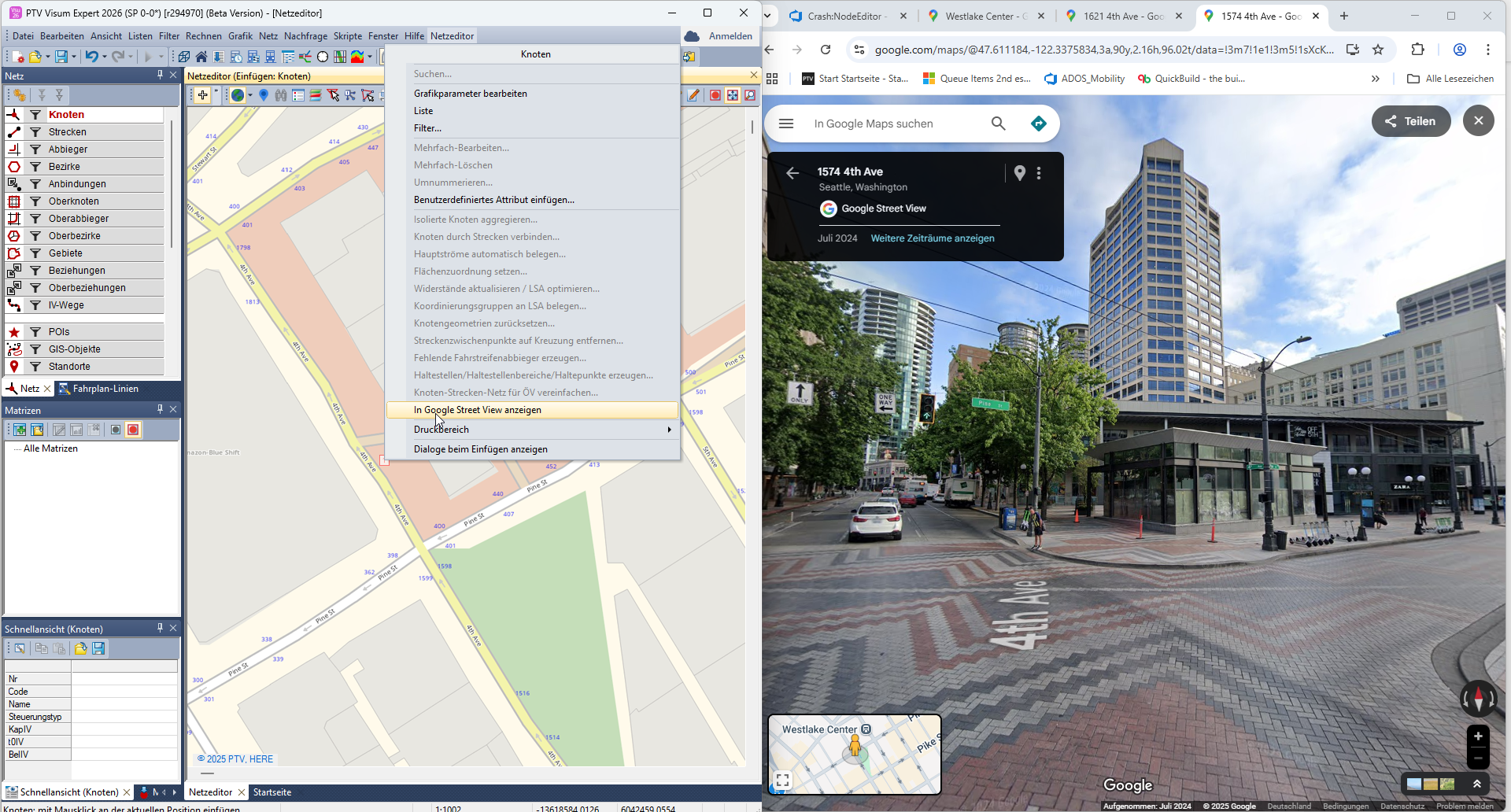
Instant Access to Google Street View
Need to check real-world infrastructure while modeling? You can now open Google Street View directly from the Network or Node Editor with a single click. This streamlines validation of junctions, lane configurations, or alignments - saving time and increasing model accuracy. (Requires internet connection.)
Matrix Estimation based on APC Data
Use detailed data from Automatic Passenger Counting (APC) systems - such as boardings, alightings, and segment-level occupancy - for matrix estimation. PTV Visum 2026 supports OD matrix corrections at the vehicle journey item level, removing the need for aggregation and preserving full data fidelity for more accurate demand forecasting.

Public Transport Modeling Extensions
PTV Visum 2026 delivers significant improvements to public transport modeling. New headway attributes simplify interfaces and workflows. Timetable-based assignment now supports two must-use modes, which aid in calibrating special service setups, such as mutual exclusions. The more flexible stop capacity model realistically represents vehicles that are dwelling, charging, or parked at stops and depots, enhancing schedule accuracy and operational validity.
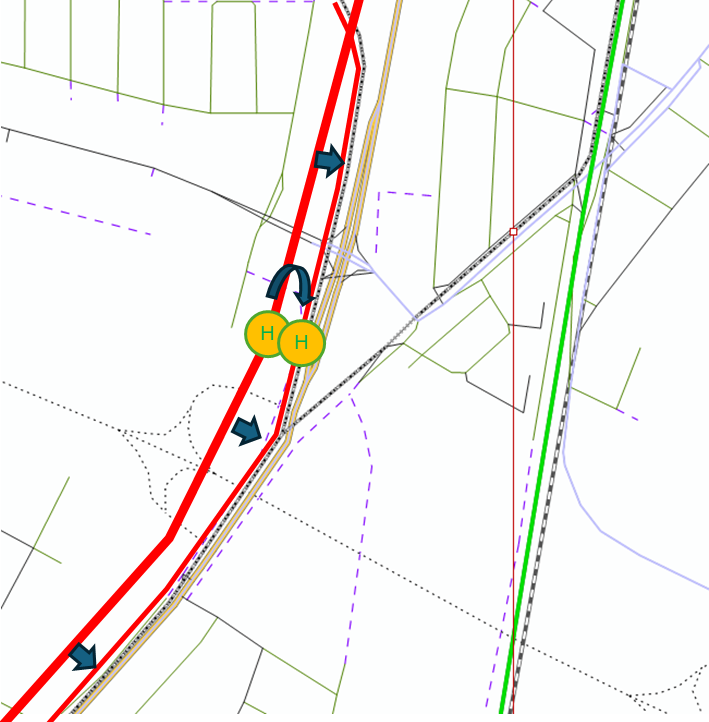
Better Merging of Public Transport Networks
PTV Visum 2026 improves the merging of public transport services into existing networks. Users can now specify how stop points are created, ensuring that only those from the source network are used and no new ones created. This prevents duplication and maintains data integrity. This feature supports cleaner integration with external systems, streamlines workflows, and guarantees consistent, high-quality network data.
Import of OSM Networks from PBF Files
The OpenStreetMap import function now supports the efficient PBF (Protocolbuffer Binary Format), which is significantly smaller and faster than XML. Visum users benefit from quicker imports with no change in workflow. Both PBF and traditional XML (.bz2) formats remain supported.
Extended GIS Functionality
Built-In GIS tools for enhanced network design: Several GIS tools previously available as Add Ins are now fully integrated in the Visum UI. Automatically generate catchment areas for stops and lines, add POIs, or build realistic zone connectors that consider physical barriers. These tools enhance spatial insights and streamline network setup for multimodal planning.
Discover PTV Visum
Microscopic Precision, Maximum Insight: PTV Vissim
PTV Vissim, the microscopic traffic simulation software, gives you unparalleled detail to analyze and optimize your network. The 2026 version introduces powerful innovations such as automated network generation with Model2Go, advanced safety analysis through critical incident detection, and enhanced AV and pedestrian modeling. From realistic weather scenarios to improved V2I prioritization, PTV Vissim 2026 empowers you to simulate, test, and refine mobility solutions with unmatched accuracy.
Release date: October 23, 2025.
Collaborative Cloud-Based Commenting
Collaborate seamlessly via PTV Hub comments: Transport planning is a team effort. With integrated cloud-based commenting through PTV Hub, you can now discuss models directly in the network editor of Visum, Vissim, and Dashboards. Eliminate scattered spreadsheets and emails - review tasks and issues collaboratively, clearly, and in context. Ideal for streamlining communication among modelers, reviewers, and stakeholders.
PTV Model2Go for Microscopic Simulation in PTV Vissim
Eliminate manual effort with map-based geometry generation: With Model2Go for Vissim, you can automatically generate detailed road networks from the HD maps from our partner Dynamic Map Platform - perfect for traffic engineering and virtual test drives. Avoid manual network modeling and receive simulation-ready INPX and OpenDRIVE files for immediate use in automotive or infrastructure projects.
Export of Critical Incidents in OpenSCENARIO XML
Reuse complex scenarios in external testing platforms: PTV Vissim Automotive can create a plurality of critical scenarios e.g. by injecting driver errors. After the Detection of Critical Incidents, they can now be exported as OpenSCENARIO XML files for re-simulation in automotive engineering. This allows for stand-alone scenario mining as well as co-simulation for ADAS/AV development.
New Detection of Critical Incidents
Identify and analyze near-misses and collision incidents: This new evaluation detects and logs safety-critical driving incidents. All licenses allow to identify collisions via geometry overlap. Meanwhile, PTV Vissim Automotive offers deeper detection of near misses using harsh brakings and critical Time to Collision (TTC) in conflict areas. This feature is ideal for safety studies and assessing AV behavior.
New 3D Pedestrian Models
Enhanced pedestrian models with detailed animations: PTV Vissim 2026 adds high-resolution pedestrian avatars with realistic walking animations. These new models improve visual realism for presentations, analyses, and stakeholder engagement and add diversity. Existing 3D avatars are still fully supported to ensure compatibility.
Show Location in Google Street View
Now, in both 2D and 3D modes, PTV Vissim lets you launch Google Street View® for the selected position directly from the network editor. This feature helps you quickly validate the model's details against the actual roadside infrastructure, eliminating the need for site visits.
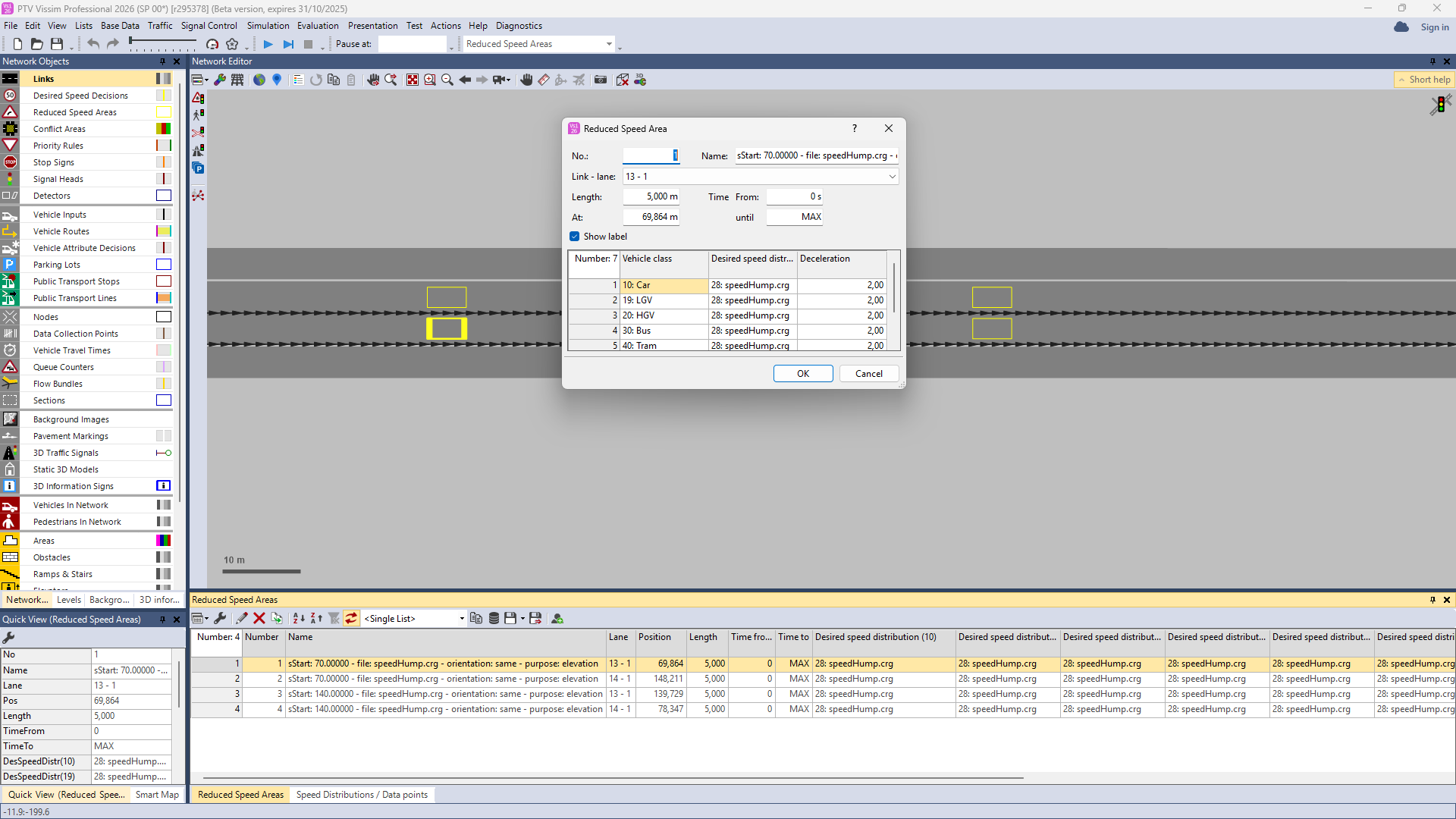
Support of OpenCRG in OpenDRIVE Files
Use embedded geometry to model speed-limiting surfaces: The OpenDRIVE import now supports embedded OpenCRG files, which provide more detailed descriptions of the road surface at specific locations. PTV Vissim automatically creates reduced speed areas at these precise locations, which is ideal for simulating driver reactions to speed humps, potholes, etc.
Free Lane Changes - More Control
Fine-tune lane changes to match real-world behavior: Free lane changes can now be calibrated in more detail to match your project needs. Both the triggering speed difference to the leading vehicle and the accepted possible deceleration for upstream vehicles are now configurable to adapt free lane change behavior.
Enhanced V2I Features for Prioritization at Signal Controllers
Improve your public transport and emergency vehicle prioritization: PTV Vissim now enables prioritized routing and seamless coordination across multiple, closely spaced intersections through providing prioritization requests now to all signal controllers up to 1,000 meters ahead.
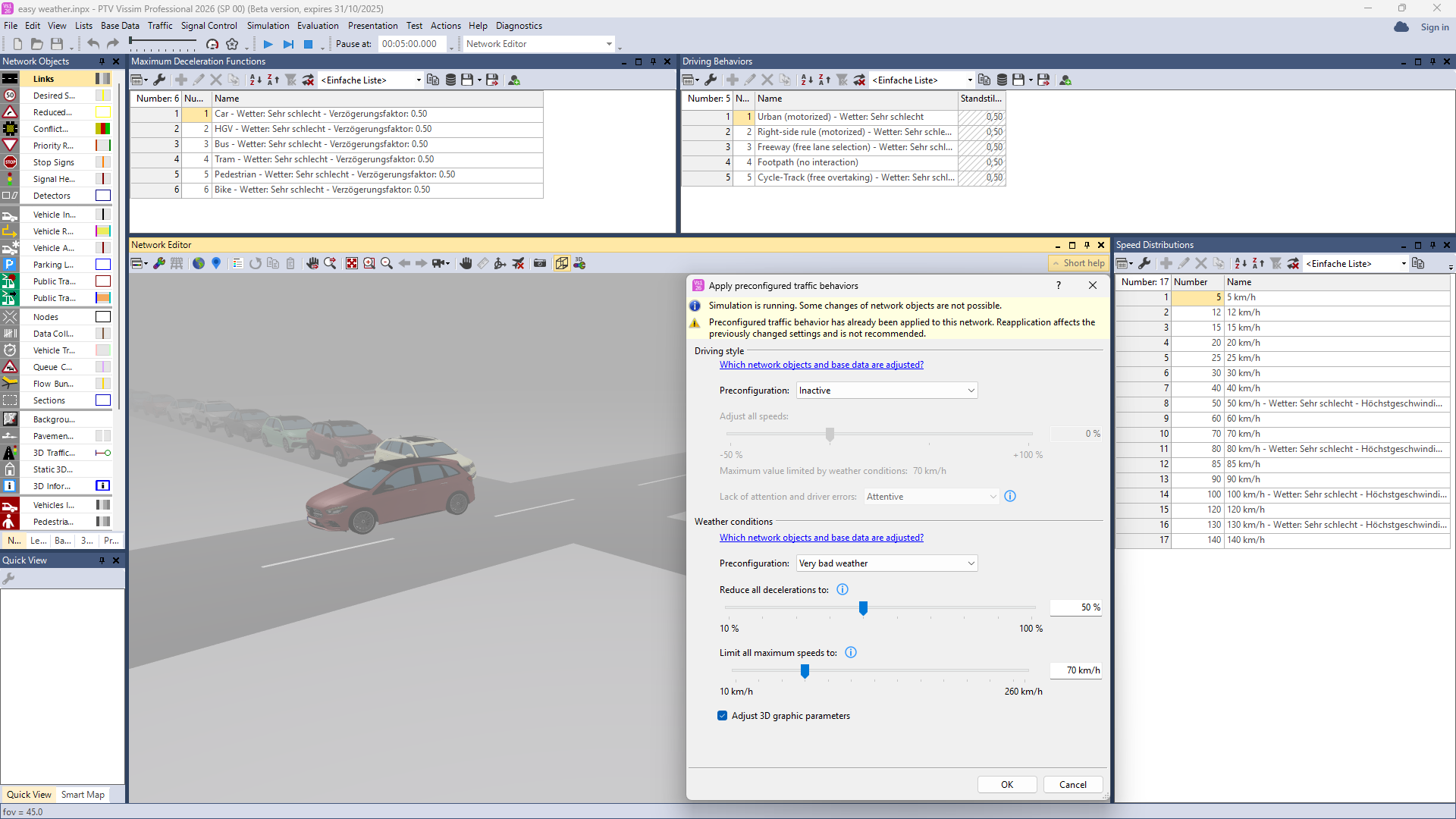
Preconfigured Weather Conditions
Consider impact of different weather conditions on your simulation: A new weather selection complements the existing presets. Easily change your test environment from neutral to bad or very bad weather conditions with impact of reduced visibility and possibly reduced traction on driving behavior, resulting in slower speeds, adapted braking behavior, greater safety distances and more.
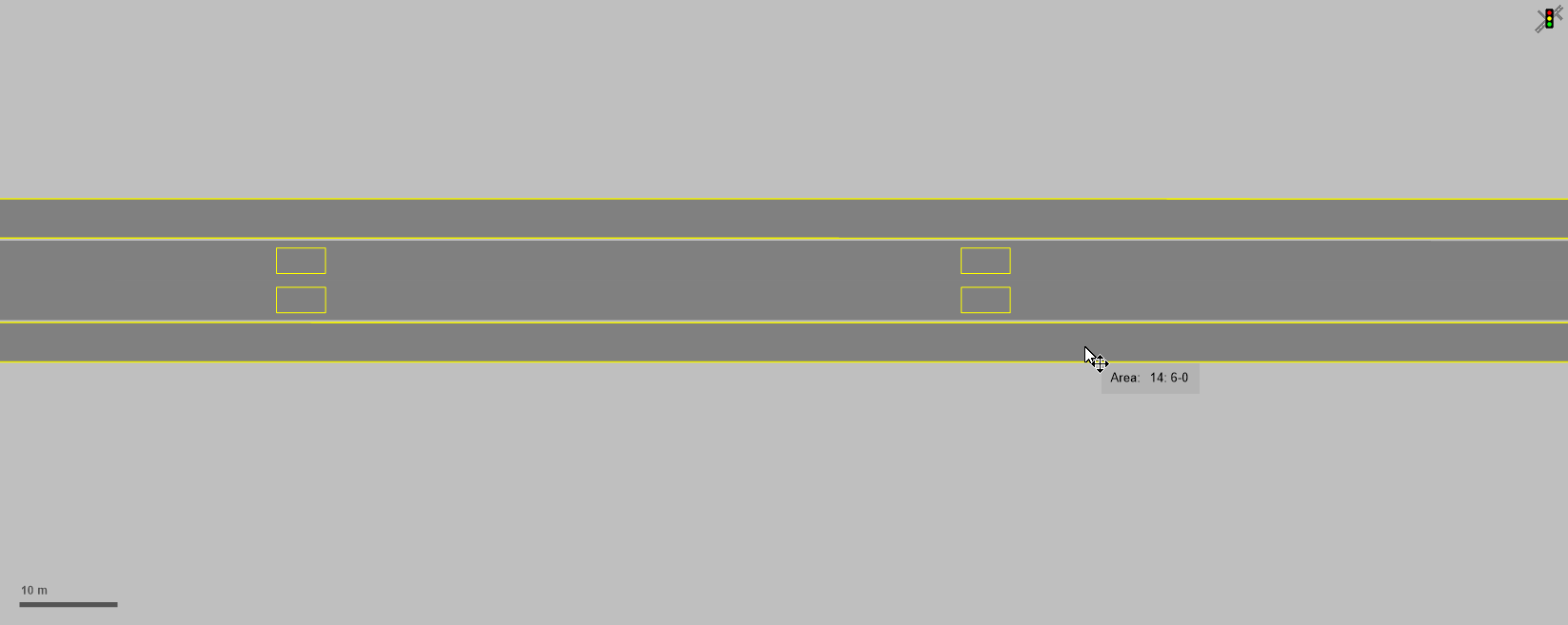
OpenDRIVE Import Improvements
Realistic pedestrian movement for your test environment: OpenDRIVE is an automotive industry standard file format for road networks. Vissim’s OpenDRIVE import automatically creates pedestrian areas for sidewalks and crosswalks, in which PTV Viswalk pedestrians can move freely with area-based walking behavior, creating realistic vehicle-pedestrian interactions.
Automatic Lane Change
Combine ALC and ACC to simulate AV behavior: PTV Vissim now includes Automatic Lane Change (ALC) to complement the Adaptive Cruise Control (ACC) car-following model. Predefined driving behaviors help to simulate different levels of automated driving with customizable settings for detailed automation modeling. This feature is ideal for testing the impact of AVs in various penetration rates on existing or planned infrastructure.
Maximum Waiting Time Distribution for Parking Lots
Model queuing in crowded pick-up/drop-off zones: We introduce a new waiting time distribution attribute that enables vehicles to leave a waiting spot after reaching a certain threshold, even if they do not park at all. This can be used to model busy areas where, in reality, the intended pickup or drop-off would have happened within the waiting time, even in the second or third row.
Flashing Yellow Arrow
Simulate permissive left turns used in North America and elsewhere: Vissim allows to set and display the state flashing yellow arrows (FYAs) in signal heads to represent permissive left turns. This feature includes GUI attributes and behavior logic that are compatible with RBC and other controllers.
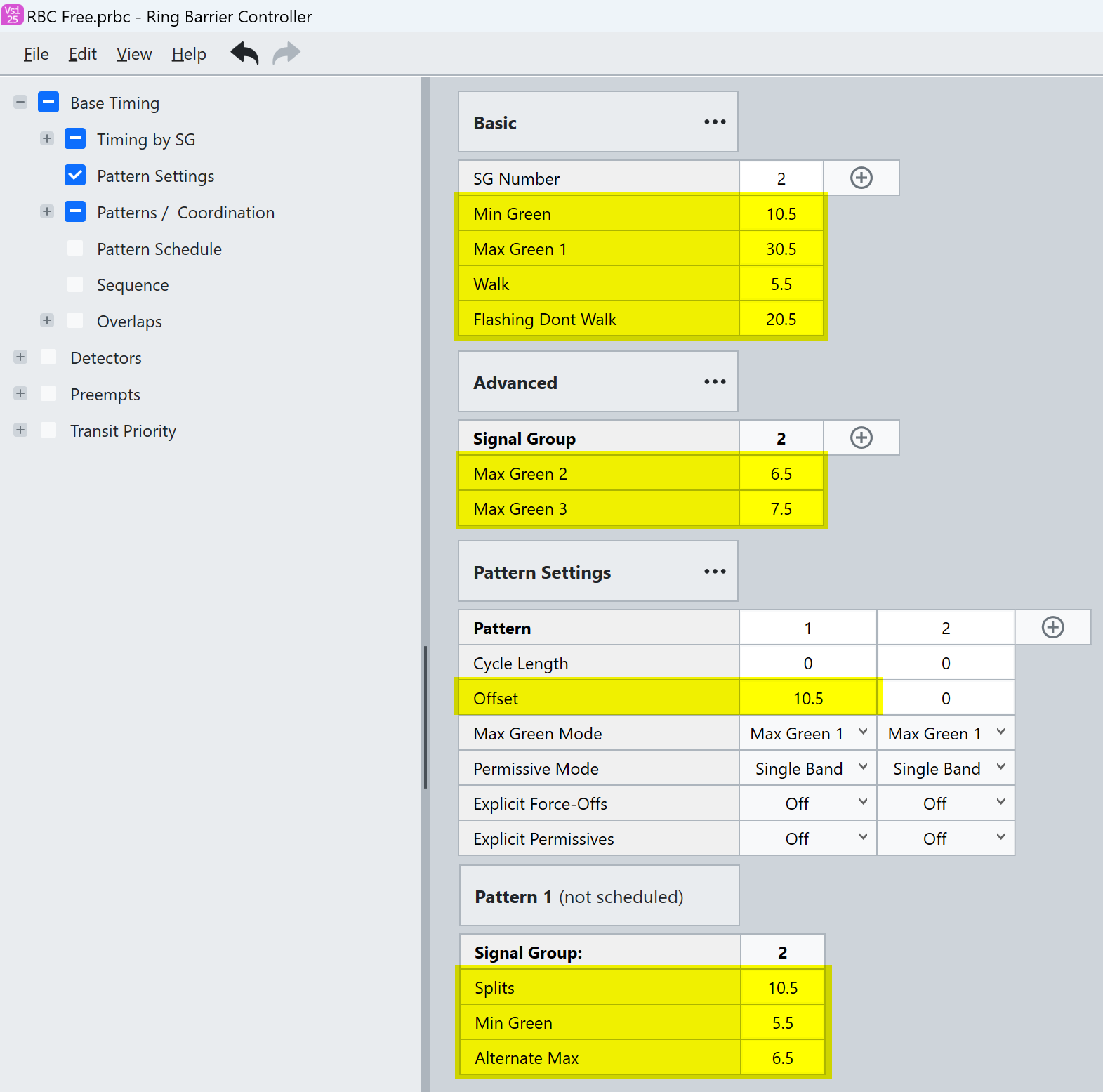
RBC Signal Controller Improvements
Ensure smoother traffic flow with precise signal timing control: The RBC signal controller now supports timing parameters with decimal-second precision, enabling more accurate traffic signal management. In coordinated mode, pedestrian signal groups can be configured so that the combined "Walk" and "Flashing Don't Walk" times exceed the green interval of the associated vehicle signal group without triggering errors. Additionally, queue detectors are now configurable, providing greater flexibility for adaptive traffic responses.
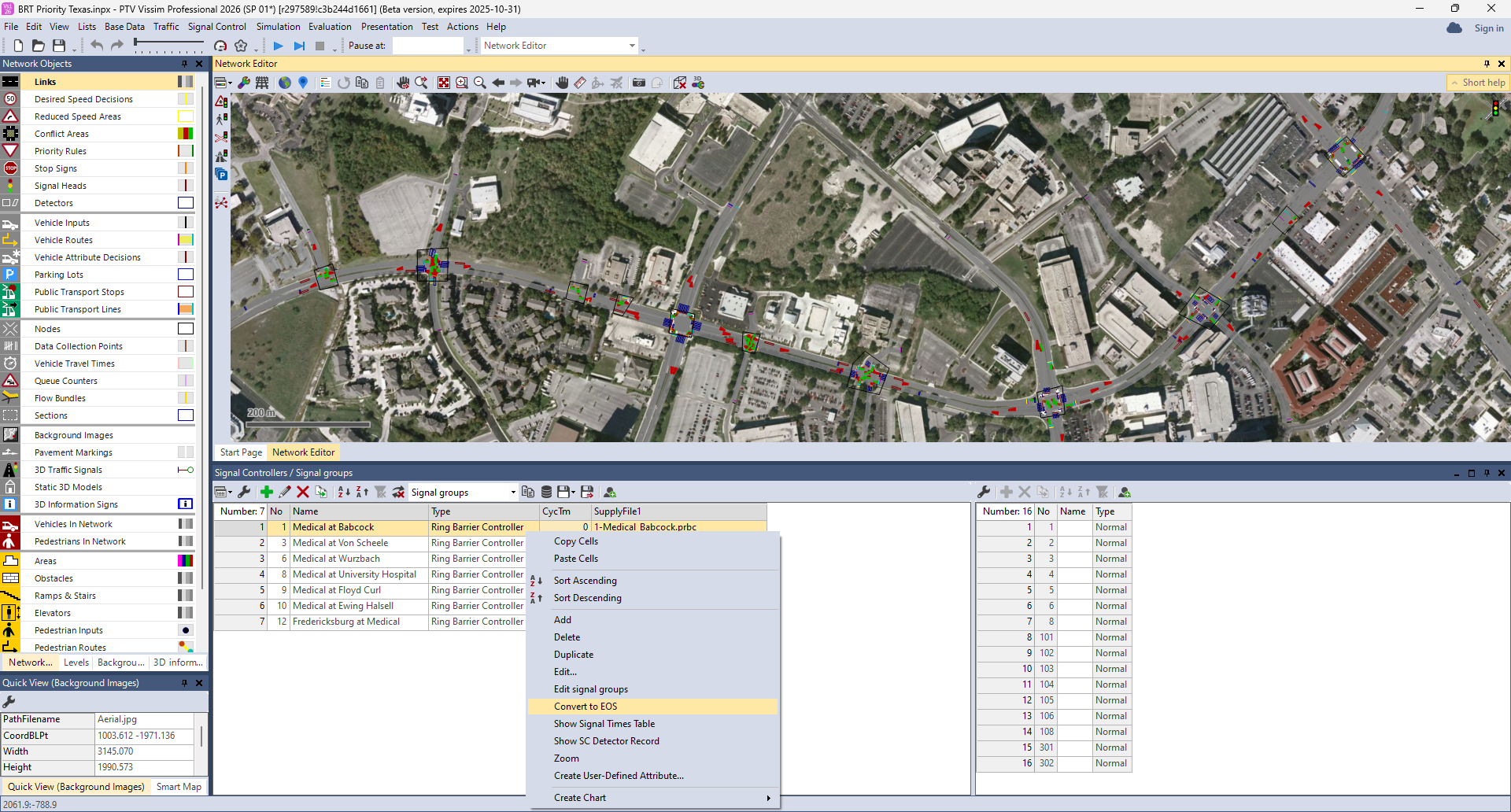
Upgrade of EOS Signal Controller
PTV Vissim 2026 introduces a major update for the EOS signal controller. Convert existing RBC Controller configurations to EOS with a single click - reuse your work and unlock advanced EOS features. The converter automatically remaps signal groups and includes built-in compatibility checks. Plus, Vissim 2026 integrates EOS 4.0, offering expanded phase and detector support, improved performance, and scalability for stable operation in demanding networks.
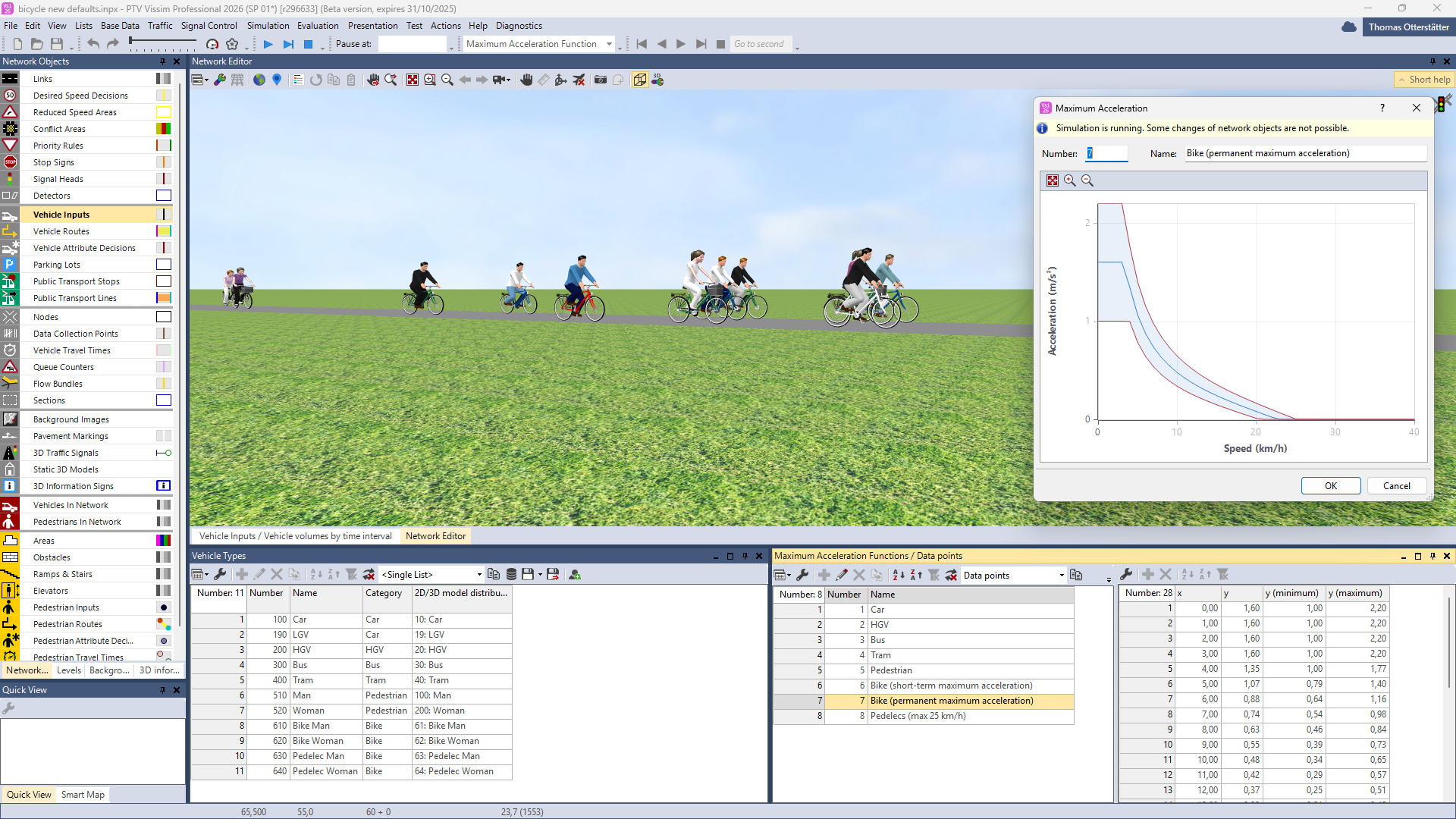
New Defaults for Bicycle
Simulate realistic cycling behavior with updated defaults: PTV Vissim 2026 introduces updated defaults for simulating bicycle traffic. These include refined driving behaviors, acceleration functions, and specific settings for motor-supported bicycles in 25 km/h and 20 mph markets. Based on improved empirical data, these defaults more accurately reflect cycling behavior, with lower standstill densities, discharge flows, and acceleration values. The acceleration defaults apply to speeds of 15–20 km/h. For higher speeds, adjust the acceleration functions.
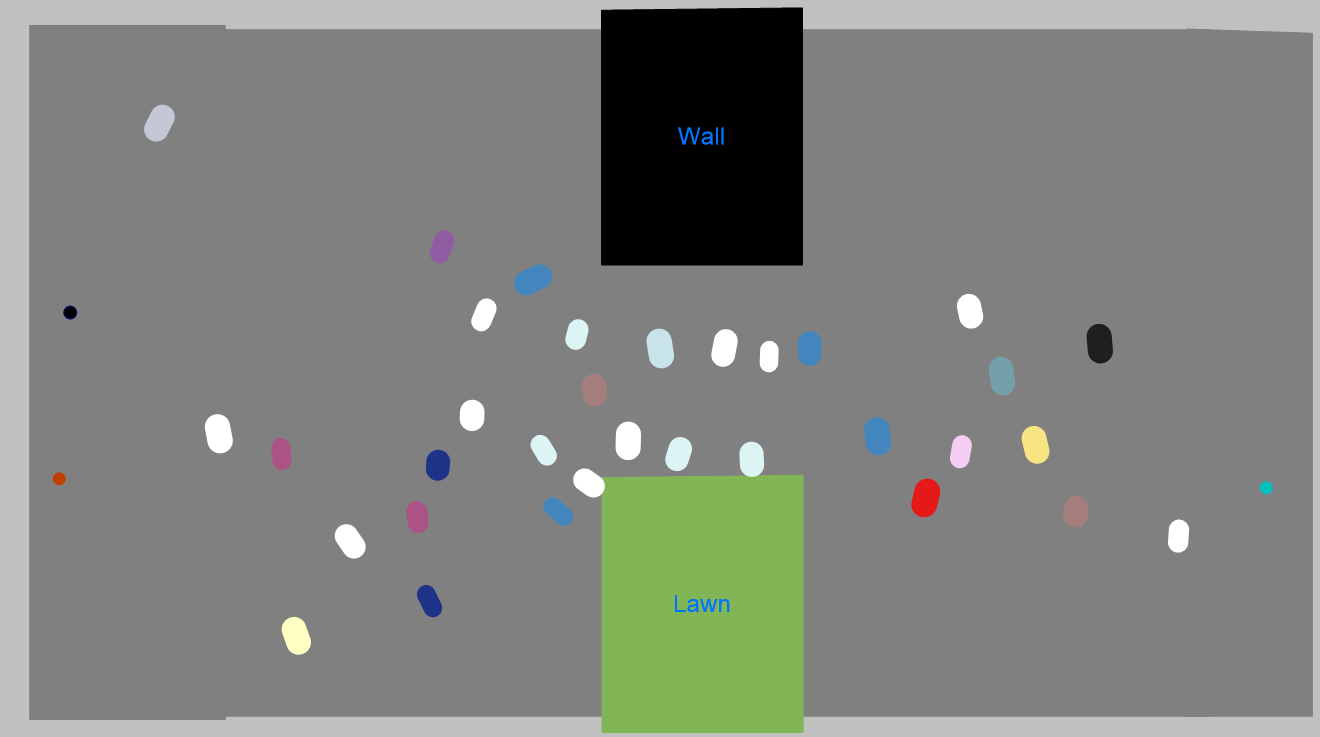
Pedestrian Improvements - Obstacle Distance
Refine the use of pedestrian space near fences etc.: You can configure additional distances for pedestrians to keep from individual obstacles. These are considered in the calculation of all static and dynamic potentials which “touch” the respective obstacle. Use it for different behavior along fences, walls and other obstacles.
Discover PTV Vissim
Smarter Workflows, Stronger Insights: PTV Vistro
PTV Vistro, the trusted software for traffic impact analysis and signal optimization, now brings even more power to your planning process. The 2026 release introduces interactive dashboards and real-time collaboration through PTV Hub, making reviews faster and more transparent. With new features like Flashing Yellow Arrow phasing and seamless pRBC signal data exchange with Vissim, PTV Vistro 2026 helps you design efficient intersections and streamline workflows from planning to simulation.
Release date: October 23, 2025.
Dashboards Powered by PTV Hub
Turn Traffic Data into Actionable Visuals: PTV Vistro 2026 introduces dashboards that are integrated with PTV Hub. These dashboards transform traffic data into interactive visual reports. Users can analyze trip generation, intersection KPIs, and more with customizable dashboards offering filtering, commenting, and scenario comparisons. These dashboards replace static reports with agile, transparent tools that facilitate clearer communication and stakeholder engagement.
Comments Powered by PTV Hub
Streamline Feedback and Team Alignment: With PTV Vistro 2026, comments bring real-time collaboration directly into your modeling workflow. Stakeholders can provide feedback on intersections and scenarios without using emails or PDFs. This feature is fully integrated with PTV Hub and accelerates review cycles, reduces rework, and ensures all input stays relevant and visible. It's ideal for managing multi-phase reviews and agency coordination.
Flashing Yellow Arrow
Improve efficiency with flexible phasing tools: PTV Vistro 2026 adds support for Flashing Yellow Arrow (FYA) phasing to the Phasing & Timing (Basic) table. It links left-turn logic to opposing through phases and automatically updates capacity calculations. Phasing is preserved in Vissim exports, which improves simulation accuracy. FYA makes it easy to design modern, flexible, and efficient intersections.
Import and Export of pRBC Signal Data to/from PTV Vissim
Seamless signal updates between tools: PTV Vistro 2026 allows for the direct, two-way import and export of pRBC signal files to and from PTV Vissim. This integration synchronizes signal timing and time-of-day patterns without altering the geometry. Update models across tools easily, improve precision, and speed up simulation workflows. Consultants and agencies benefit from seamless planning-simulation handoffs.
Discover PTV Vistro
Collaboration for Smarter Mobility: PTV Hub
PTV Hub, the cloud-based platform for connected modeling and simulation, now delivers even more power to your workflows. The 2026 version introduces real-time commenting across Visum, Vissim, Viswalk, and Vistro, advanced scenario comparisons with global KPIs, and interactive dashboards for deeper insights. PTV Hub 2026 is your central space to collaborate, analyze, and accelerate decisions - anytime, anywhere, and with everyone.
Collaborative Cloud-Based Commenting
PTV Hub 2026 introduces centralized, cloud-based commenting across Visum, Vissim, Viswalk, Vistro, and Hub Dashboards. Users can utilize a unified UI to annotate scenarios, network elements, and visualizations with real time speed. Role-based access ensures controlled collaboration, and a dedicated workspace streamlines comment tracking, resolution, and model navigation. This feature accelerates review cycles, boosts transparency and is available with PTV Hub-ready desktop licenses.
Cloud Computation with Scripting for PTV Visum
From early 2026, advanced users will be able to execute PTV Visum scripts and custom procedures directly in the cloud. This will enable scalable modeling workflows and unlock powerful cloud computing resources for script-based planning tasks. Ideal for consultants, agencies, and multi-team operations, it facilitates parallel runs and speeds up result processing for customized models- without the burden of maintaining costly infrastructure.
Scenario Comparison with Global KPIs
The Scenario KPI table in PTV Hub allows you to compare Visum and Vissim results, such as travel times, modal splits, VKT, and GHG emissions, without opening the model. Users can configure grid views, prioritize metrics, and benchmark outcomes across scenarios to support review workflows and decision-making processes. Each result set is automatically generated after a cloud calculation, allowing planners and policy advisors to easily assess trade-offs and performance outcomes at a glance.
Multi-Version Model Support
PTV Hub now supports modeling with the 2025 and 2026 main versions of Visum, Vissim, Viswalk, and Vistro. Users can seamlessly update their models to the latest release or revert back to older versions saved in revisions when needed. Cloud computation now displays which kernel version was used for calculations, adding clarity and control. These improvements ensure continuity for projects spanning multiple releases while offering backward compatibility across revisions, allowing teams to remain aligned and maintain momentum without disruption.
Visualize Intersection Movements with a new Widget
A new dashboard widget uses intuitive schematic with compass-based directionality to display intersection KPIs. It visualizes movement volumes, delays, or LOS using customizable bands, labels, colors and thickness. Hover, highlight, and filter functions to enhance result exploration. This tool translates detailed Visum, Vissim, and Vistro turn data into an intuitive visual layer, making it ideal for operational diagnostics, design validation, and stakeholder engagement.
Interactive Dashboard Filters for Data Exploration
Drill into data with dashboard filters: Interactive filters allow users to dissect data across dashboards by object types, attribute values, or numerical ranges. Explore performance by corridor, traffic class, or KPI (e.g., speed, capacity, or emissions) with multi-layer filters. Dual-range sliders and map-linked selections simplify hotspot detection and scenario benchmarking. This feature enables flexible and intuitive exploration of regional or corridor-specific insights across transport KPIs.
Vistro-to-Dashboards Integration
PTV Vistro 2026 integrates with PTV Hub Dashboards, allowing users to visualize trip generation, signal timing, and intersection KPIs in rich, interactive formats. Users can apply filters, post comments, and compare alternatives directly within a public- or stakeholder-facing interface. This upgrades traditional traffic impact studies, turning static PDFs into collaborative and transparent digital engagements for faster planning approvals.
Discover PTV Hub
Data-Driven Public Transport Planning: PTV Lines
PTV Lines, the cloud-based software for public transport network and schedule planning, now offers deeper insights and smarter tools for optimizing services. The 2026 version introduces ridership analysis, occupancy-based performance metrics, and cost dashboards to help you align supply with demand. With enhanced visualization features like non-overlapping line displays, PTV Lines 2026 makes it easier to design efficient, transparent, and passenger-focused networks.
Ridership Analysis
Analyze passenger flows across routes and stops: PTV Lines now enables detailed ridership calculation by distributing origin-destination (OD) data across routes, services, and stops. By incorporating travel preferences such as fastest journeys, fewer transfers, and shorter waiting times, PTV Lines realistically distributes passengers. PTV Lines provides planners with insights into demand distribution, boarding and alighting hotspots, and corridor usage. These insights support strategic improvements in frequencies, timetables, network design, and connectivity.
Occupancy Rate Based on Vehicle Capacity
Identify overcrowded or underused routes throughout the day: Occupancy calculations reveal spatial and temporal inefficiencies in the network by connecting ridership with vehicle capacity. These calculations highlight overcrowding during peak hours and underutilized services during off-peak times. These insights enable smarter vehicle allocation, allowing operators to align capacity more closely with actual demand. With PTV Lines, planners can fine-tune services and stops based on actual demand, improving cost efficiency and the passenger experience.
Costs and Performance Idicators at a Glance
Model and visualize services with different vehicle types: The Indicator Dashboard lets users link trips to distinct vehicle types with different capacities and costs. Through interactive charts, planners can see daily in-service costs, resource needs, and production KPIs for each service day. This enables cost modeling and operational planning within a single interface. By simulating alternative vehicle allocations, planners can identify the optimal fleet composition and align supply with demand. This improves cost efficiency and enhances service quality for passengers.
Non-Overlapping Line Display for Corridors
Improve network readability with line separation tools: Public transport lines that share a corridor are now offset from each other, eliminating overlap. This feature enhances clarity during network editing and visual audits, making redundant coverage, service gaps, and branching inconsistencies easier to detect. The new display also produces cleaner PNG exports for presentations and reports, facilitating more effective communication with stakeholders and streamlining route planning workflows.
Discover PTV Lines
From Data to Decisions - in Record Time: PTV Model2Go
PTV Model2Go takes automation in transport modeling to the next level. The 2026 version includes AI-based job estimation for more accurate demand forecasts, automated macroscopic demand modeling with Model2Go Macro, and high-precision network generation for Vissim using HD maps. These innovations eliminate manual effort, accelerate project setup, and deliver ready-to-use models. It helps planners and engineers move from time-consuming tasks to fast, data-driven decisions.
AI-Based Job Estimation for Smarter Transport Planning
Unlock reliable work trip data with automated job mapping: Since around one-third of all daily trips are work-related, accurate job location data is essential for meaningful transportation modeling. Traditional data sources are costly and often incomplete. However, M2G’s AI-driven method now estimates employment figures at the hectare level by analyzing building types, height, footprint, and points of interest (POIs). This method delivers high-resolution job distribution data, sharpening demand forecasts in Germany, Austria, Italy and Poland. More countries will be added in 2026.
Accelerate Mobility Solutions with High-Precision Map Data
Every simulation begins with an accurate network. PTV Model2Go for Vissim now automatically generates traffic models from high-definition maps using the Dynamic Map Platform, eliminating manual work and accelerating project setup. The result is ready-to-use, high-fidelity networks for traffic engineering and automotive development. These networks are delivered as INPX and OpenDRIVE files. These are perfect for virtual test drives and detailed traffic analyses.
Automatically Generate Demand Models with Zonal Granularity
PTV Model2Go Macro Demand Generation will launch in Germany by late 2025 and will automate partly the creation of tour-based macroscopic demand models. Each model includes population data, differentiated by person groups per traffic zone, as well as geospatial data linked to specific trip purposes. This significantly accelerates the development of a travel demand model, enables precise accessibility modeling, and supports urban and regional planning. Expansion to more countries planned for 2026.